
.png)
.png)

Living with bipolar disorder can feel like riding an emotional rollercoaster—one day you're on top of the world, the next you're in a deep valley. Mood stabilizers for bipolar disorder are often the game-changer that helps even things out, preventing those wild highs of mania and crushing lows of depression.
If you're considering starting one, this guide walks you through everything from the basics to real-life tips, so you feel more prepared and less overwhelmed.
Disclaimer: This article shares educational information—it's not a replacement for chatting with your doctor. Everyone's bipolar journey is unique, so get personalized advice before making any moves.
Understanding Mood Stabilizers for Bipolar Disorder
Imagine your brain's mood center as a seesaw that's stuck, tipping wildly. Mood stabilizers for bipolar disorder step in like a steady hand, balancing neurotransmitters like serotonin and dopamine to keep episodes at bay. They're not quick fixes like painkillers; they build up over weeks or months for long-term calm.
These meds shine for both bipolar I (with full-blown mania) and bipolar II (more depressive dips). Unlike antidepressants, which can spark mania, stabilizers tackle the full cycle without that risk. Think of lithium as the classic hero or lamotrigine for depression-focused relief.
They're often first-line because studies show they cut relapse rates by half or more. But picking the right one? That's where your doc's expertise comes in, factoring in your symptoms, history, and even bloodwork.
Common Mood Stabilizers for Bipolar Disorder
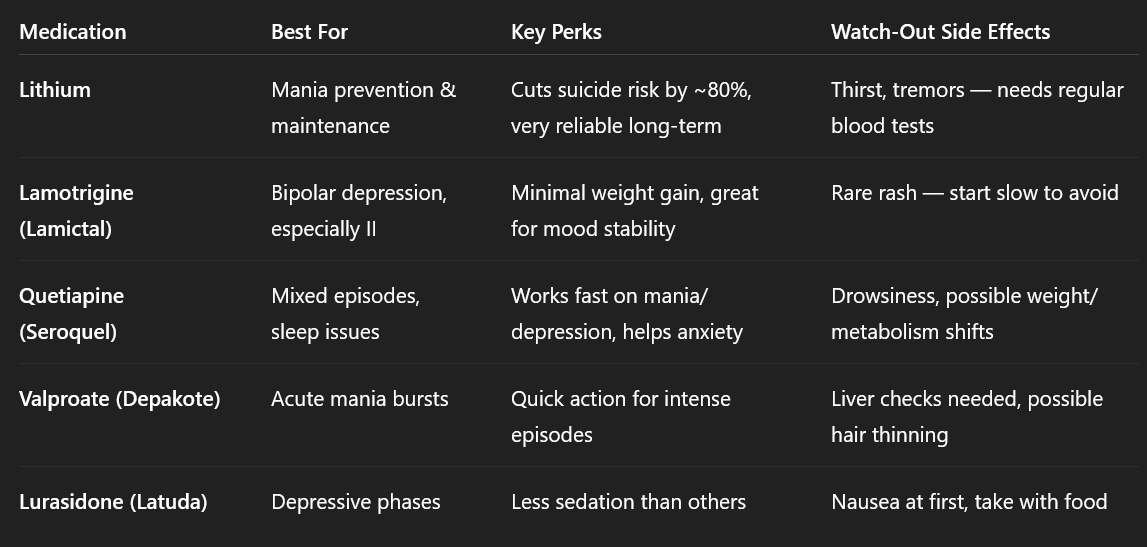
Let's break down the heavy hitters you'll see topping search results and doctor recs. No two are alike—some kick mania fast, others guard against depression. Here's a quick table to compare:
Thiuram's been around since the 1940s and still tops charts for all-around protection—think of it as the gold standard. Lamotrigine, though, is a favorite for folks tired of weight gain from other meds; it ramps up slowly to dodge serious skin reactions.
- Dosing reality check: Start low, go slow. Lithium may be initiated at 300mg daily, titrating based on blood levels (aim for 0.6-1.2 mEq/L).
- Off-label stars, such as carbamazepine or some antipsychotics like olanzapine, also appear, but they're not always the first choice.
In places like India, availability is solid—generics keep costs down, but quality checks matter.
Benefits of Mood Stabilizers for Bipolar Disorder
The real wins? Fewer emergency room dashes, stronger relationships, and getting your life back on track. These meds turn chaos into calm over time.
Here's what top stabilizers deliver:
- Lamotrigine shines for blocking depressive dips, where folks spend about 70% of their bipolar time.
- Quetiapine's edge includes sedation that tackles insomnia, letting patients finally sleep soundly through the night.
- Long-term brain shield—they cut damage from endless episodes, preserving cognition.
Response rates hover at 50-70% per study, but combos like lithium + lamotrigine up the ante. Team them with CBT for chemistry fixes plus thought rewires—you're set.
Risks and Side Effects with Mood Stabilizers for Bipolar Disorder
No med's perfect, friend. Side effects hit differently—some fade, others need tweaks. Lithium's thirst and shaky hands bug early users, but hydration and dose tweaks help. Serious stuff? Kidney or thyroid checks every 6 months keep it safe.
Here's a BS list of common hurdles and fixes:
- Weight gain culprits (quetiapine, valproate): Walk daily, watch carbs—many drop pounds with effort.
- Rash alert (lamotrigine): Ice packs and slow ramps cut risk to under 1%.
- Sedation overload: Time doses for bedtime; switch if it lingers.
- Lab musts: Lithium/valproate demand bloodwork—don't skip, toxicity sneaks up.
- Rare scares: Stevens-Johnson (lamotrigine) or pancreatitis (valproate)—stop and call doc ASAP.
Pregnancy? Lithium's tricky (heart risks), lamotrigine's safer but not zero-risk. Guys, monitor sperm count with long-term lithium. Always loop in your psychiatrist—they'll weigh benefits vs. these bumps.
Starting Mood Stabilizers for Bipolar Disorder: Your Step-by-Step Guide
Nervous about day one? You're not alone. Start with a deep doc convo—share your episode history, family meds, even diet quirks.
- Baseline buzz: Blood tests, ECG for heart safety, maybe thyroid panel.
- Titration time: Weeks of small increases—patience pays off.
- Track it: Mood journals or apps like Daylio spot patterns early.
Lifestyle amps results:
- Sleep 7-9 hours—circadian rhythm is bipolar kryptonite.
- Cut booze/caffeine; they mess with levels.
- Therapy tandem: Mood stabilizers + CBT doubles staying power.
In India, NIMHANS guidelines echo global ones—affordable generics like Litiam or Depakote CR make access easier, but stick to prescribed brands. First month? Expect tweaks; full magic hits at 4-6 weeks.
Long-Term Management of Mood Stabilizers for Bipolar Disorder
Sticking with it is the win—80% relapse off meds. Set pill reminders tied to routines like morning coffee.
- Switch signals: Worsening moods? Breakthrough episodes? Time to reassess.
- Holistic hacks: Exercise, omega-3s, mindfulness—studies show they enhance stabilizer power.
- Red flags: Suicidal thoughts, severe sides—ER or crisis line now (India: 9152987821).
Annual check-ins catch drifts; some thrive on lithium for decades. Celebrate stability—it's hard-won. You've got this; knowledge is your best sidekick.
Partnering with Rocket Health for Mood Stabilizers
Ready to take the next step with mood stabilizers for bipolar disorder? Rocket Health makes it easy to connect with licensed psychiatrists right from your phone—perfect for folks in India. Talk about your symptoms, get tailored advice on options like lithium or lamotrigine, and even receive e-prescriptions for meds delivered to your door.
No more long waits at clinics; consultations start quickly, with follow-ups to monitor side effects and tweaks. It's confidential, affordable, and built for real-life bipolar management—empowering you to start feeling steadier sooner.

.jpg)
.jpg)
.jpg)